Best Time to Visit Ho Chi Minh City: Rain, Heat and What to Pack
When the rain comes, whether it will stop your plans, and what to put in your bag for each season.
The driest months are December to April, and the easiest are January to March. February averages 8 mm of rain on a single rain day. The rainy season runs from May to November. It slows a trip more than it stops one.

The short answer
Come between December and March if you can choose freely. Those months are dry, and the average daily high sits between 31.6 and 33.6 °C. That is still hot, but it is the mildest the city gets.
April is dry too, but it runs hotter. Its average high is 34.5 °C, and the city’s heat record of 40.0 °C was set in April. May then takes over as the hottest month on average, at 34.9 °C.
From May to November you travel in the rainy season. That is not a reason to cancel. It is a reason to order your days differently, pack differently, and keep one afternoon loose.
There is no cool month. The monthly average temperature stays between 27.3 and 29.5 °C all year. So the real choice is not warm or cold. It is dry and bright, or wet and less sunny.

I plan around the rain rather than against it. Mornings for the long walks, afternoons kept loose, and indoor stops ready for the days that open early.
The rhythm of the year
Ho Chi Minh City has a tropical savanna climate. The year splits into two seasons, not four. The dry season runs from December to April, and the rainy season from May to November.
The dry months are very dry. January averages 12 mm of rain, February 8 mm and March 18 mm. The airport table counts one or two rain days in each of those months.
April is the hinge. Rain rises to 57 mm over four rain days, the heat peaks, and the air is still fairly dry. Then May arrives with 202 mm over 13 rain days, and the season turns.
The wet months stay wet for a long stretch. June, July and August each bring between 219 and 231 mm. September and October are wetter still in the airport table, with 490 and 340 mm.
November is the way out. Rain drops to 128 mm over nine rain days. December falls again to 41 mm over five days, and the dry season settles in for the new year.
Humidity follows the rain. Relative humidity averages 70 to 72 percent from January to April. It climbs to 79 to 85 percent from May to October, then eases to 77 to 80 percent in November and December.
Sunshine follows it too. January to April gets 245 to 272 hours of sun a month. From May to November the figure falls to 162 to 200 hours. Cloud is part of the rainy season, not only rain.
The rainy season, explained properly
Most weather pages say the rainy season lasts from May to November and stop there. That sentence is true, but it hides the question you actually have. Will the rain block what I came here to do?
Start with the numbers. In the airport table, the wettest months are September, October, July and August, in that order. Each of them has between 16 and 19 rain days.
Now read those numbers the other way round. Even in July and September, the average month still has about 12 days without rain counted. In May, October and November, the share of dry days is higher.
The table does not say how long the rain lasts on a rain day. A brief shower and a long downpour can both count as one. That is the main limit of every climate table, including this one.
How much rain falls in a year?
The yearly total depends on the source. The airport normals give 1,970 mm over 121 rain days. The city’s general climate summary gives about 1,800 mm over about 150 rain days.
So the honest answer is a range: 1,800 to 1,970 mm a year, with between 121 and 150 rain days. The sources differ, most likely because they cover different reference periods. Neither number should be read as exact.
The same caution applies to the peak. In the airport table, September stands out at 490 mm. Normals shift with the period measured, so treat September as the likely peak, not a fixed rule.
Does it rain at a set time of day?
Many travellers and residents describe the rain as a late afternoon and early evening habit, often in short bursts. Our climate data does not measure that. Take it as a pattern to watch, not a promise.
Does the heat drop when it rains?
Not in the monthly averages. The average high stays between 32.6 and 33.5 °C from June to September. The rainy season is warm and wet, never cool and wet, so dress for heat in every month.
What about flooding?
Many people search for flooding before they book. Our climate data covers rainfall, not water on the streets, so this page gives no flooding figure. We would rather leave a gap than fill it with a guess.
What the data does support is simple preparation. Wear shoes that can get soaked, keep valuables in a sealed pouch, and leave slack in your afternoons. That prepares you for wet streets whatever their depth.
Is September a bad month to visit?
No, but it asks the most of your planning. September is the wettest month in the airport table, with 490 mm over 18 rain days. That is more than double the rain of June or August.
Now look at what does not change. The average temperature in September is 28.1 °C, the average high 32.6 °C and the average low 25.0 °C. It is the same warm city as in any other month.
About 12 days of the average September pass without rain counted. The table cannot tell you how many hours each rain day loses. So plan as if any afternoon might turn wet, and enjoy the ones that stay dry.
What does a September trip look like in practice? Outdoor plans go first in the day, while the sky is still clear. Museums, cafes and long meals wait in reserve. A day trip goes on the first clear morning, not on a fixed date.
If September is your only window, take it. Stay somewhere central, carry a rain layer everywhere, and add one spare day to the plan. You trade some comfort for a trip that still works.
If you can choose freely, though, pick another month. December to March gives you the same city with far less rain. May and November give you the rainy season at its lighter edges.
October deserves the same care as September. It is the second wettest month in the airport table, with 340 mm over 16 rain days. Late October trips are more of a gamble than early November ones.
What rain changes in a day
A rain day changes the order of things more than the list. You still see the city. You simply stop treating the afternoon as fixed, and you let the weather choose between two plans.
Build each day with a dry plan and a wet plan. The dry plan is walking, open markets, parks and day trips. The wet plan is museums, cafes, a long lunch and shopping under a roof.
Our guide to things to do in Ho Chi Minh City mixes both kinds. Pick two of each before you arrive, and a wet afternoon stops being a problem to solve on the spot.
Getting around is where rain bites hardest. A short walk becomes a soaked one, and waiting outside for a ride is the worst part. Keep a covered spot in mind near each stop on your list.
The metro as a dry option
Metro Line 1 helps along one axis of the city. It opened on 22 December 2024 and runs 19.7 km from Ben Thanh Market to the New Eastern Bus Terminus at Suoi Tien. At opening, service ran from 05:00 to 22:00.
Three of its stations are underground: Ben Thanh, Opera House and Ba Son. They were the first underground stations in the country. On a wet afternoon, they make a dry place to wait while a shower passes.
Evenings
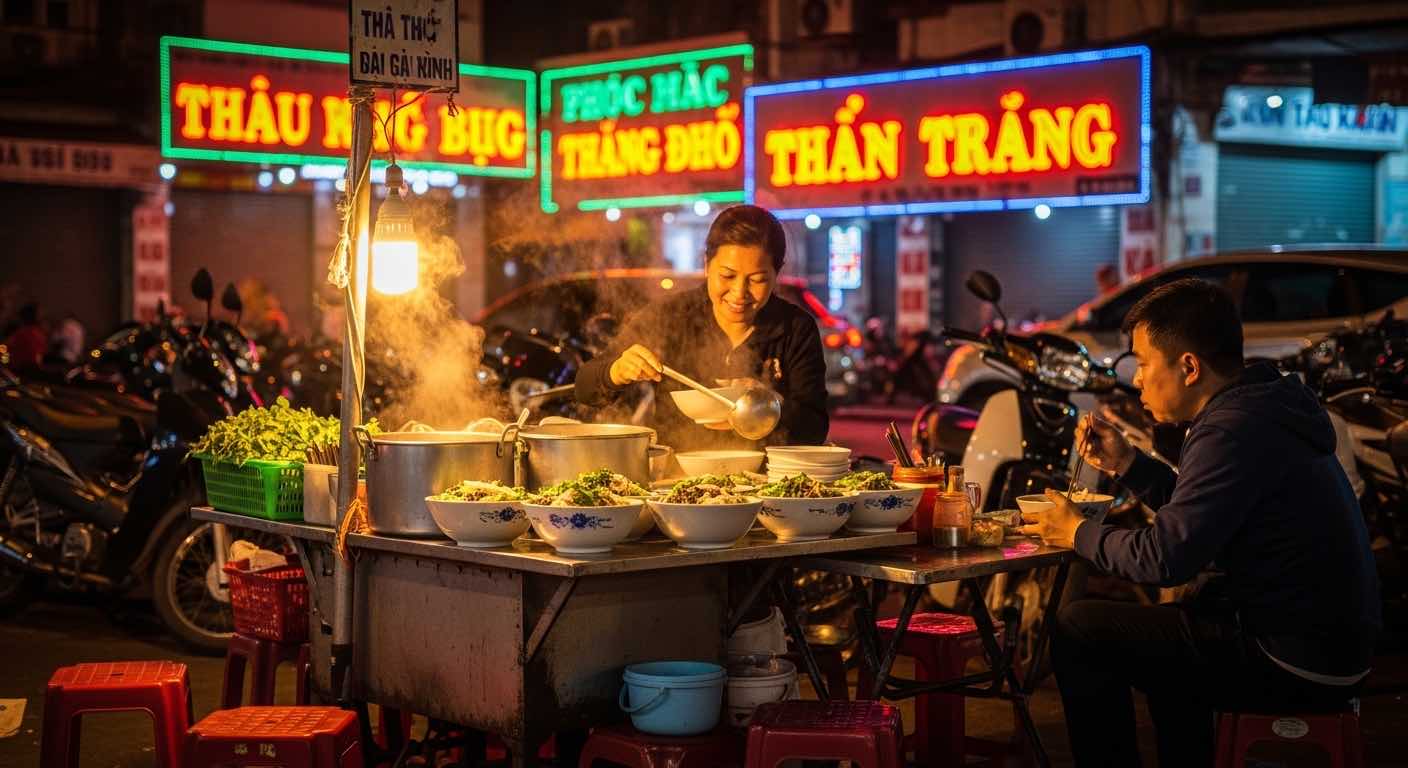
Evenings deserve the same flexibility as afternoons. If you plan a night out, check the sky at dusk and keep an indoor fallback. Our night markets guide helps you choose where to go.
What to wear and pack
Dress for heat first and rain second. Every month averages above 27 °C, and the average low never drops below 23.1 °C. Nothing in the monthly normals calls for a sweater, even in January.
Clothes
Light cotton or linen is the base. Choose loose cuts that let air move against your skin. Pack more tops than you think, because humidity between 70 and 85 percent means frequent changes.
Shorts and light trousers both work in the heat. Bring one pair of long, thin trousers or a long skirt for evenings and for places where you prefer to cover your legs.
Shoes
Shoes matter more than any other item. Pick a pair that can get soaked and dry again, such as sport sandals or light mesh trainers. Leather and suede have a hard time in the wet months.
In the rainy season, keep a second pair in your room so a wet pair can dry overnight. In the dry season, one pair of comfortable walking shoes is enough, with sandals for the evenings.
Rain gear
Carry a rain layer that fits in a bag: a compact umbrella, a light poncho or a thin waterproof jacket. In this heat, a poncho or umbrella usually suits better, because a sealed jacket traps warmth.
Add a dry bag or zip pouch for your phone, passport and cash. A small towel and a spare pair of socks earn their place in a day bag from May to November.
Sun protection
The dry season is also the sunny season. January to April averages 245 to 272 hours of sunshine a month. Pack a hat, sunglasses and sunscreen, and plan some shade for the middle of the day.
Sun gear stays useful in the rainy months too. Sunshine falls to 162 to 200 hours a month from May to November, which still leaves plenty of bright hours between the clouds.
The short packing list
- Light cotton or linen tops, more than you think you need.
- One pair of long, thin trousers or a long skirt.
- Shoes that can get soaked, plus a second pair in the wet months.
- A compact umbrella or a light poncho.
- A sealed pouch for phone, passport and cash.
- Hat, sunglasses and sunscreen in every season.
Month by month, in one table
The table below is here for reference only. It carries the averages from the Tan Son Nhat airport station, the figures used throughout this page. These are long-term normals, not a forecast for any year.
| Month | Average high | Average low | Rain | Rain days |
|---|---|---|---|---|
| January | 32.0 °C | 23.4 °C | 12 mm | 2 |
| February | 32.7 °C | 23.1 °C | 8 mm | 1 |
| March | 33.6 °C | 24.9 °C | 18 mm | 1 |
| April | 34.5 °C | 26.4 °C | 57 mm | 4 |
| May | 34.9 °C | 26.4 °C | 202 mm | 13 |
| June | 33.5 °C | 25.5 °C | 224 mm | 16 |
| July | 33.0 °C | 25.2 °C | 231 mm | 19 |
| August | 32.9 °C | 25.1 °C | 219 mm | 17 |
| September | 32.6 °C | 25.0 °C | 490 mm | 18 |
| October | 32.3 °C | 25.0 °C | 340 mm | 16 |
| November | 32.4 °C | 24.9 °C | 128 mm | 9 |
| December | 31.6 °C | 23.9 °C | 41 mm | 5 |
Two columns tell most of the story. The rain columns jump in May and fall back in December. The temperature columns barely move, which is why packing for heat works in every month.
Dates worth planning around
Weather is not the only thing that shapes a trip. One date matters more than any other in the Vietnamese year, and it moves every year. That date is Tet, the Lunar New Year.
Tet is the most important day of the year in Vietnam. Its first day fell on 17 February 2026. In 2027 it falls on 6 February, right in the heart of the dry season.
The holiday is about family. Expect fireworks, family meals, the first visits of the year known as xông đất, and red envelopes for children and elders.
It also changes the city. The holiday ends with businesses reopening, which tells you many close for it. If you travel over Tet, check opening days for anything you plan to book.
Questions people ask
What is the best month to visit Ho Chi Minh City?
February is the driest month in the airport table, with 8 mm of rain on one rain day. January and March come close. If Tet falls in your February, weigh the celebration against closed shops.
Will rain ruin my trip in the rainy season?
Usually not, if you plan for it. Even the wettest months average about 12 days without rain counted. Keep afternoons flexible, wear shoes that can get wet, and carry a rain layer.
Is it ever cold in Ho Chi Minh City?
Not by the monthly averages. The coolest average low is 23.1 °C, in February. The record low is 13.8 °C, set in January, but that is a record and not a normal night.
How much rain does the city get in a year?
Between about 1,800 and 1,970 mm, depending on the source. The airport normals give 1,970 mm over 121 rain days. The general city summary gives about 1,800 mm over about 150 days.
For the rest of your preparation, our Ho Chi Minh City travel tips cover the practical side. A clear morning is the moment for one of our day trips from Ho Chi Minh City.
When you know your dates, see all our Saigon tours and pick one that fits the season you land in.
Clara grew up just outside Saigon and moved to the city five years ago to study. She has been riding its streets ever since. Most evenings you’ll find her leading our night rides, usually with a bowl of snails waiting at the end. Everything in this guide is what she tells her own guests before the first stop.